



 Orders
What is ROS2?
ROS2 (Robot Operating System 2) is one of the most important robotics software frameworks in modern robotics engineering.
ROS2 helps developers build:
- autonomous robots
- drones
- robotic arms
- warehouse robots
- humanoid robots
- industrial robots
- AI robotics systems
ROS2 provides a powerful communication framework that allows different parts of a robot to work together efficiently.
ROS2 is widely used in:
- robotics research
- autonomous vehicles
- industrial automation
- AI robotics
- SLAM systems
- drone systems
- robotic simulations
ROS2 is becoming one of the core foundations of modern robotics software engineering. (Wikipedia)
Why ROS2 is Important
Modern robots are extremely complex.
A robot may contain:
- cameras
- LiDAR
- IMU sensors
- motor controllers
- navigation systems
- AI systems
- robotic arms
- vision systems
ROS2 helps all these systems communicate together.
Without ROS2:
- robotics software becomes difficult to scale
- communication becomes messy
- large robotics projects become difficult to manage
ROS2 solves these problems using modular robotics software architecture.
ROS1 vs ROS2
ROS2 was developed as the next-generation version of ROS1.
ROS2 improves:
- real-time performance
- security
- scalability
- distributed systems
- DDS communication
- multi-robot systems
- industrial reliability
ROS1 is no longer the future direction of robotics software development.
Most modern robotics systems are now moving toward ROS2. (Wikipedia)
Core Concepts of ROS2
ROS2 is built around several important concepts:
- Nodes
- Topics
- Publishers
- Subscribers
- Services
- Actions
- Messages
- DDS Middleware
Understanding these concepts is essential for robotics software engineering.
ROS2 Nodes
A node is an independent robotics software process.
Example robot nodes:
- camera node
- motor control node
- SLAM node
- navigation node
- AI detection node
Each node performs a specific task.
ROS2 systems are modular because robots are divided into multiple nodes.
ROS2 Communication Architecture
Camera Node ───► Vision Node ───► Navigation Node
      │
      ▼
SLAM Node ───► Motion Controller ───► Robot Motors
ROS2 enables all nodes to exchange information efficiently.
Publishers and Subscribers
ROS2 uses a publisher-subscriber communication model.
Example:
Camera Node (Publisher)
            │
            ▼
Vision Node (Subscriber)
The publisher sends data.
The subscriber receives data.
This architecture allows robots to scale easily.
ROS2 Topics
Topics are communication channels between nodes.
Examples:
- /camera/image
- /scan
- /imu/data
- /cmd_vel
- /odom
Topics continuously stream data between robotics systems.
Services in ROS2
Services are used for request-response communication.
Example:
Robot asks:
"Move Arm to Position"

Controller replies:
"Movement Completed"
Services are useful for short operations.
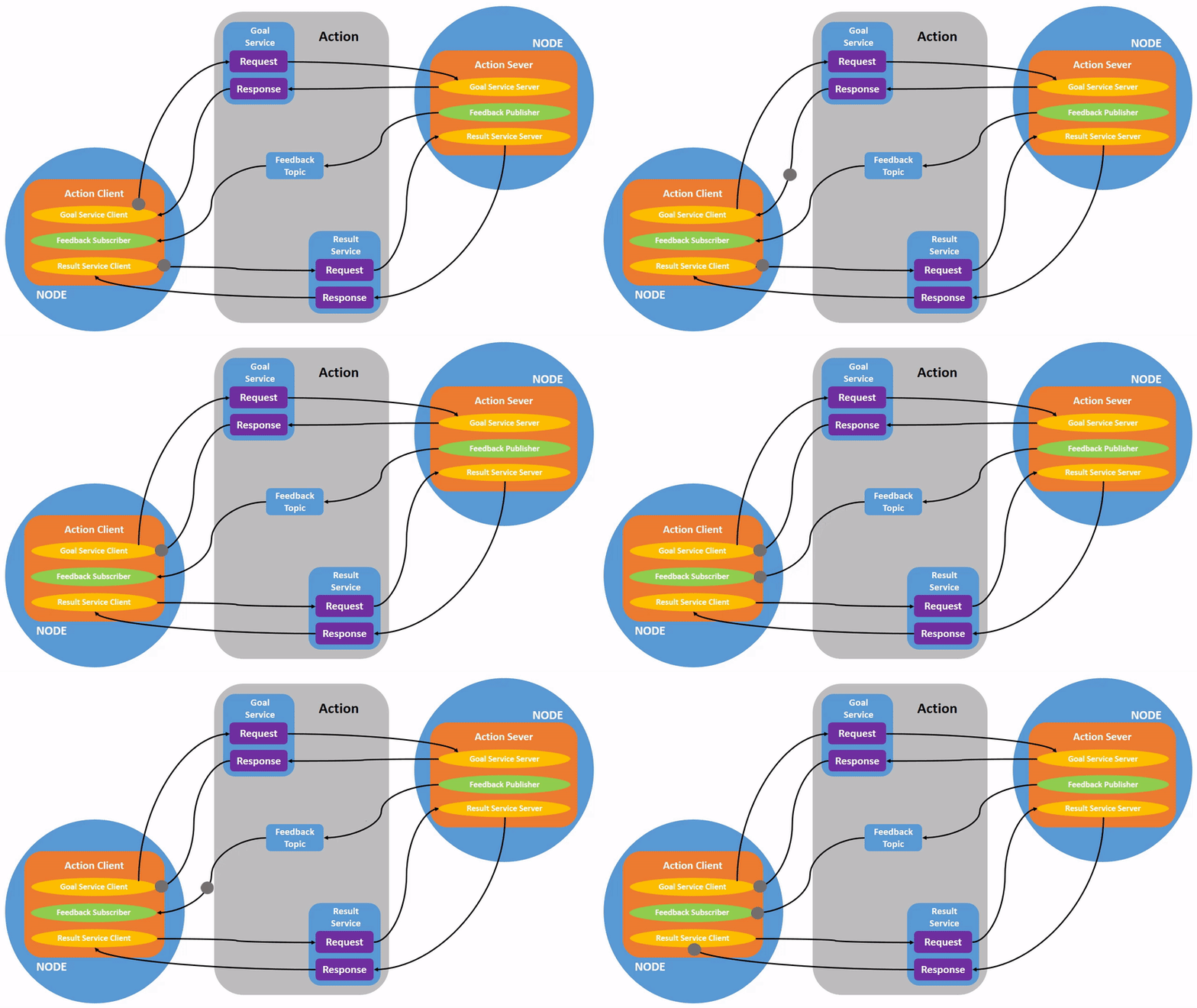
Actions in ROS2
Actions are used for long-running tasks.
Examples:
- navigation goals
- robotic arm movement
- autonomous missions
Actions provide:
- feedback
- cancellation
- progress tracking
DDS Middleware in ROS2
ROS2 uses DDS (Data Distribution Service) for communication.
DDS provides:
- real-time communication
- scalability
- reliability
- distributed networking
This is one of the biggest improvements over ROS1. (arXiv)
ROS2 Installation Guide (Ubuntu 22.04)
ROS2 Humble is one of the most stable LTS versions for Ubuntu 22.04. (ROS Documentation)
Step 1 — Update Ubuntu
sudo apt update
sudo apt upgrade -y
Step 2 — Enable Universe Repository
sudo apt install software-properties-common
sudo add-apt-repository universe
Step 3 — Add ROS2 Repository
sudo apt update && sudo apt install curl -y

sudo curl -sSL \
https://raw.githubusercontent.com/ros/rosdistro/master/ros.key \
-o /usr/share/keyrings/ros-archive-keyring.gpg
Step 4 — Add ROS2 Source List
echo "deb [arch=$(dpkg --print-architecture) \
signed-by=/usr/share/keyrings/ros-archive-keyring.gpg] \
http://packages.ros.org/ros2/ubuntu \
$(. /etc/os-release && echo $UBUNTU_CODENAME) main" | \
sudo tee /etc/apt/sources.list.d/ros2.list > /dev/null
Step 5 — Install ROS2 Humble
sudo apt update

sudo apt install ros-humble-desktop -y
Step 6 — Source ROS2 Environment
source /opt/ros/humble/setup.bash
To automatically source ROS2 every terminal:
echo "source /opt/ros/humble/setup.bash" >> ~/.bashrc

source ~/.bashrc
Step 7 — Verify ROS2 Installation
Run:
ros2
If installed correctly, ROS2 commands will appear.
ROS2 Workspace Structure
Typical ROS2 workspace:
ros2_ws/
 ├── src/
 ├── build/
 ├── install/
 └── log/
The src folder contains ROS2 packages.
Creating Your First ROS2 Workspace
mkdir -p ~/ros2_ws/src

cd ~/ros2_ws

colcon build
ROS2 Build System
ROS2 uses:
- colcon
- CMake
- package.xml
for building robotics packages.
Python vs C++ in ROS2
ROS2 mainly supports:
- Python
- C++
Python is easier for beginners.
C++ is used for:
- high-performance robotics
- real-time systems
- embedded robotics
Most robotics engineers learn both.
ROS2 + Computer Vision
ROS2 is heavily used with Computer Vision systems.
Examples:
- object detection
- SLAM
- AI robotics
- visual navigation
- autonomous drones
ROS2 integrates well with:
- OpenCV
- YOLO
- TensorFlow
- PyTorch
ROS2 + SLAM
SLAM stands for:
Simultaneous Localization And Mapping.
ROS2 supports advanced SLAM systems such as:
- RTAB-Map
- ORB-SLAM
- Cartographer
- SLAM Toolbox
These help robots:
- map environments
- localize themselves
- navigate autonomously
ROS2 + Navigation2
Navigation2 (Nav2) is one of the most important ROS2 frameworks.
Nav2 provides:
- autonomous navigation
- obstacle avoidance
- path planning
- robot localization
Navigation2 is widely used in:
- warehouse robots
- autonomous robots
- delivery robots
ROS2 Simulations
ROS2 works with robotics simulators such as:
- Gazebo
- Ignition Gazebo
- RViz
- Webots
Simulations help engineers test robots safely before using real hardware.
RViz in ROS2
RViz is a robotics visualization tool.
It allows engineers to visualize:
- robot models
- LiDAR data
- camera streams
- SLAM maps
- navigation paths
RViz is one of the most important ROS2 tools.
Real-Time Robotics with ROS2
ROS2 improves real-time robotics support compared to ROS1.
Real-time systems are important for:
- drones
- humanoid robots
- industrial robotics
- autonomous vehicles
ROS2 was designed to support industrial-grade robotics systems. (arXiv)
ROS2 in Autonomous Robots
ROS2 is widely used in:
- autonomous drones
- self-driving robots
- warehouse automation
- AI robotics
- humanoid robotics
Modern autonomous robotics heavily depends on ROS2.
Best Way to Learn ROS2
Recommended roadmap:
- Learn Linux
- Learn Python
- Learn basic robotics
- Install ROS2
- Learn nodes and topics
- Build small robots
- Learn SLAM
- Learn Navigation2
- Learn simulations
- Build autonomous robots
Beginner ROS2 Projects
Good beginner ROS2 projects:
- obstacle avoidance robot
- LiDAR mapping robot
- line follower robot
- camera streaming system
- ROS2 robotic arm
- autonomous navigation robot
Advanced ROS2 Projects
Advanced projects:
- autonomous drone
- SLAM robot
- warehouse robot
- humanoid robot
- AI vision robot
- multi-robot systems
Future of ROS2
ROS2 is rapidly becoming the standard robotics software framework.
Future robotics systems will increasingly use:
- AI
- computer vision
- cloud robotics
- distributed robotics
- autonomous systems
ROS2 will remain one of the most important technologies in robotics engineering. (arXiv)
Official ROS2 Documentation
Official ROS2 Documentation:
Official ROS2 Installation Guide:
ROS 2 Ubuntu Installation Guide
ROS2 Beginner Tutorials:
Conclusion
ROS2 is one of the most important technologies in modern robotics.
It enables robots to:
- communicate efficiently
- scale modularly
- perform autonomous navigation
- integrate AI systems
- process sensors
- control hardware reliably
By learning:
- ROS2
- Linux
- robotics programming
- SLAM
- Navigation2
- simulations
students can build highly advanced autonomous robotic systems.
ROS2 is becoming essential for future robotics engineers.
Frequently Asked Questions
Start Building Autonomous Robots with ROS2
ROS2 is becoming one of the most important robotics technologies in the world. Start with Linux, Python, basic ROS2 nodes, simulations, SLAM, and small robotics projects. Every advanced robotics engineer once started with their first ROS2 node, first robot topic, and first autonomous robotics experiment.